Médiathèque des Abattoirs, Toulouse
Presentation of the exhibition:
"Location and demonstration of a large collection of artists' books from the 60s to today, the program regularly Media Slaughterhouse exhibitions around this artistic phenomenon.
Dedicate a prominent place in the artist's book is a strong orientation to our data collection, a look at the history of this medium.
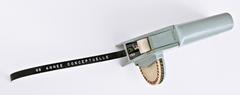
Indeed, this collection reflects the development of this new artistic genre, its genesis in the sixties, in the wake of the avant-garde, until today. Preferred books are conceived as art projects that must be considered as works in which the book is itself a process. So is there for the books edited by Seth Siegelaub to whom we pay tribute from November 24 with the exhibition "69 years conceptual".
Introducing this selection of artists' books made mostly between 1968 and 1971 in the wake of said conceptual art, the Media Museum of Abattoirs proposes to draw the lines, a portrait of Seth Siegelaub. Seller and publisher established in New York, he worked in the short time previously mentioned, as an independent curator of exhibitions at twenty, before finally abandoning the world of art.
If a library, of course specializing in contemporary art, is interested in such a character, whose course not without relevance, it is mainly because of the role it plays in the evolution of the artist's book, which in the late 60 is emerging. For originality
Seth Siegelaub is to have published, in 1968 - and also the famous Xerox Book (1) which will of course be presented on that occasion - several catalogs that claim to be the exhibition (2) and not as a supplement or an illustration of it. The book is the place where will unfold original works, designed to mark the publication. Certainly, it seems that Siegelaub not particularly interested this medium for reasons of bibliophile but rather because it provides answers to various questions put to him then his role as presenter of art.
A role that will fit into a historical context: because we must not forget, we are in 1968 and the world is shaken by violent protests will not be foreign to the evolution of the avant-garde artists. At that time, artists have a general distrust vis-à-vis the object as a result of the work, its material existence and its value. They are opposed, consciously or unconsciously, to conceptions capitalist ruling and challenge the private property. The book is then a way to bring artists and the public without going through the museum or gallery, to escape all trading process and thwart the control, same underlying, all these institutions.
Today, we are familiar with the term conceptual art, although it is often synonymous in our minds, an art mainly cerebral and sealed. Moreover, this term is often maligned by its own players in this "movement" (3). Siegelaub, for example, sees in this name, something very simplistic, that does not reflect the intention of opening and investigation as to what may be an artistic act. "Conceptual art" would be after him, creating a market economy, culture. He noted that it is also one of the first international movement, given the numerous exchanges between European and American artists. Although initially located in the United States, yet it is in Europe that will be held major exhibitions of such art.
But this exhibition does not aim to present unique and Siegelaub would also give a broader picture on the production of artists' books at a turning point, particularly rich in innovations. Although the focus is placed on the artists' conceptual "or" minimalist "(those" forbidden "by Siegelaub, like Sol LeWitt, Lawrence Weiner, Joseph Kosuth, Robert Barry ...), many other American and European artists are also presented.
This exhibition is threefold: historical, while showing the books "shaped" by a singular time, the '60s, marked by huge social and political art, presenting major works produced by artists then avant-garde and writing these publications in a broader context, as evidenced in the exhibition catalogs and related documentation the events and personalities of the time missed (like "When Attitudes Become Form," "Artists and Photographs," Documenta 5 ...) human, we have seen, focusing on Seth Siegelaub who pioneered in the emergence of a new medium, the artist's book.
Finally, note that beyond the documentary aspect and a little bit nostalgic for this show, these editions seem essential for understanding the evolution and trends that drive today's book publishing Artist.
Moreover, "69 years conceptual" echoes the exhibition presented Bernar Venet by Slaughterhouse until March 13, 2011 as found in the collection of it most of the artists featured at the Library.
(1) Xerox The book is a book consisting only from photocopies. Siegelaub asked seven artists to make each specific work on 25 pages, which are then copied and printed.
(2) It is generally considered "January 5-31, 1969" as the first publication that the catalog becomes something different than it was before. It is not the place to promote or sell art, a documentary tool, but becomes a reference object in itself an ephemeral event, exposure. But these features are already embedded in the editions of 1968. "
(3) Thus, Lawrence Weiner, quoted by Christian Schlatter:" (...) reserve the label "conceptual art" to some artists is rather asinine. The majority of conceptual artists you flood of documents, documentation, clocks, drawings, tables (...). In the context of the art of the seventies, it would be better to speak of contemporary art. Forget the term conceptual art. It's a blind way. It is a trip of ego. "


0 comments:
Post a Comment